Wednesday, July 27, 2016

Revamped Yahoo Messenger Released for Windows, Mac

A redesigned Yahoo Messenger launched for mobile last December, and it is now available for Windows and Mac.


The new Windows and Mac versions of Yahoo Messenger boast the same features as the mobile application, including photo and GIF sharing, as well as the ability to unsend messages.


Senior director of product management Austin Shoemaker said in a blog post that the legacy version of the Yahoo Messenger desktop app will no longer work starting Aug. 5, and users will need to upgrade, adding:


Want to share photos from your latest vacation or simply spice up a message? Save precious time with our drag-and-drop feature to share multiple photos at once. Then spread the love by “liking” any posts or images that stand out to you. If you'd rather reply with a GIF, you can easily search and send GIFs to your heart's content. Pro tip: Play GIF roulette and type /gif + any search term.


With Messenger's desktop notifications, you can multitask at your computer without having to worry about missing an important message from family, friends or coworkers again.


We are also introducing the unsend button–one of our most beloved Messenger features now on desktop. Sent that message too soon or caught a last-minute typo? Now you can take back a message, photo or GIF (yes, even after you've pressed send). You can find out more about this exciting feature here.


Readers: Do any of you use Yahoo Messenger?


YahooMessengerGIF


For B2B Brands and Their Agencies, It's Time To Get Down To Business

So many things in the world are changing, literally as we speak. So why wouldn't the relationship between brands and their agencies change, too? 


According to a study conducted by Forbes Insights and sponsored by Oracle Marketing Cloud, 60% of brand/agency executives say their roles and responsibilities have changed significantly over the past two years while another 48% of marketing executives say evolving brand and agency roles are making successful collaboration more difficult.


Mark Roberts, CMO of ShoreTel, says the shift in roles is noticeable. “Agency relationships have evolved dramatically over the last few years, primarily as they have explored how to become more strategic in the relationship and as marketing groups have struggled to keep up with the pace of change in technology.”


This Is Changing Everything

Data and analytics have changed the face of B2B marketing and the relationship between brands and agencies. But make no mistake about it. At the heart of these efforts is a drive to effectively gather and mine rich sources of customer data.


In fact, when asked to identify which area will see the greatest impact from more effective collaboration between brand and agency peers, the number one response among the survey respondents was capitalizing on customer data/analytics.


Kevin Koh, CEO of DDB Group Korea, says the coming together of all data is vital. “We are aware that a client will have their own data and their own opinions on what they believe will be best for their brand. But we will also have our own data. We need to collaborate together so that we can share the data and create campaigns and strategies that will create long-lasting impact.”


There is much work to be done though as 40% of respondents say their organizations don't effectively use customer data to create new marketing programs. And almost as many- 38%-don't effectively create and deliver timely content tailored to specific customer personas.


Enter Technology

Tech of course plays a major role considering many of the marketing technology tools live on the B2B brand side-such as the marketing automation system with prospect contact information. The agency will likely need access to the results of marketing campaigns, either directly or indirectly, but that doesn't mean they have to own and manage the tool.


There is a lot more to this story. Download Getting Down to Business B2B Brands & Agencies Working Together and learn how B2B brands and agencies are translating collaboration into engagement. 


The Hidden Side Effects of Using Big Data to Better Understand Your Customers

When it comes to better understanding your customers, you likely leverage every possible resource from personas to mapping the customer experience journey.  For marketers, big data is a boon – it's a gold mine of information that, to be sure, requires a bit of digging through the dirt to get to the real treasure.


Big data has been used to tout everything from customer sentiment to fraud prediction. By letting computers do what they do best, it is believed that crunching all that information can lead to some pretty significant correlations – between click streams, geographic location, and even transactional data. Tying it all together helps bring the customer service lens into even greater focus.
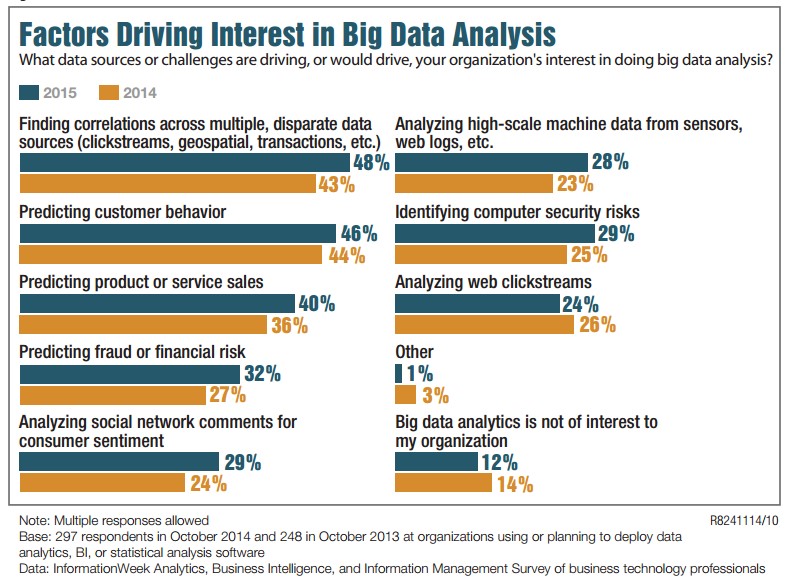

big-data-analysis


With that being said, however, relying too much on big data has its drawbacks.  Beyond the fact that we're just starting to understand what's out there and how it's all relatable, big data should not be looked at as a marketing or customer service panacea.  In fact, there are a lot of areas where relying too much on big data to better understand your customers can have the opposite effect, like these:


Lack of Availability


Let's say you're shopping online for a new pair of shoes. You're scrolling through pair after pair on your cell phone until you find the perfect pair. Unfortunately, they're backordered.  You want to be notified when more are in stock, but you're not sure how to do that.  You tap for customer service. You're invited to type in your question and see a list of canned solutions.  That's a bit too cumbersome so you look for a way to contact a representative.


Instead, you're asked to submit your question to a helpdesk or online community. Trying to fill out a trouble ticket, you see that the service isn't compatible with mobile. You give up in frustration. Shortly thereafter, you get an email reminding you about the item you were interested in, and asking how the company can do better.


If you're visualizing a cartoonish response of steam coming out of your ears from anger and frustration, now you can imagine the limitations that big data has.  Perhaps the only retailer to truly get a handle on big data at this level is Amazon, and they've been able to integrate unimaginable reams of data seamlessly while being able to grow and scale their company with consistency.


random-amazon-warehouse
Amazon had to grow and scale its operations – and quickly, yet they still deliver consistently high-rated customer service thanks to big data analytics.


When the service you need isn't available, you grit your teeth for long wait times ahead, and test your patience with the poor rep that has to look up the details of the backordered product in a sea of potential choices. The point is, Big Data shouldn't just be pored over by analytics experts, but made available to everyone at every tier in the organization.


Rush to Judgment and Unrealistic Expectations


Big data is the foundation of a perilously-positioned scale. On one end, you have the camp that's rigid and inflexible. Things have always been done a certain way, and the deluge of big data isn't going to change that. These companies risk getting outmaneuvered by their more proactive competitors. They make hasty decisions that may not always be backed by data science, and then backpedal when things go south.


At the opposite end, there are those who are positively drowning in analytics. They're so swallowed up by data that they hesitate to make any decision without consulting the numbers like some kind of oracle. They shrug off their “gut feelings” or intuition because the data doesn't account for that.


There's no doubt that big data is changing the way we market, but as many industry trends go, it can easily be blown out of proportion into something it's not. People are complex, self-serving, habitual, ever-changing creatures. Trying to make sense of that is not something that can be done overnight. It requires careful planning, an understanding of the different “pools” of information the data is drawing from, and one's own understanding of their target market to fully grasp.


Otherwise you end up with complex, complicated decisions that are impossible to predict and frustrating to implement.


Data Modeling Difficulties


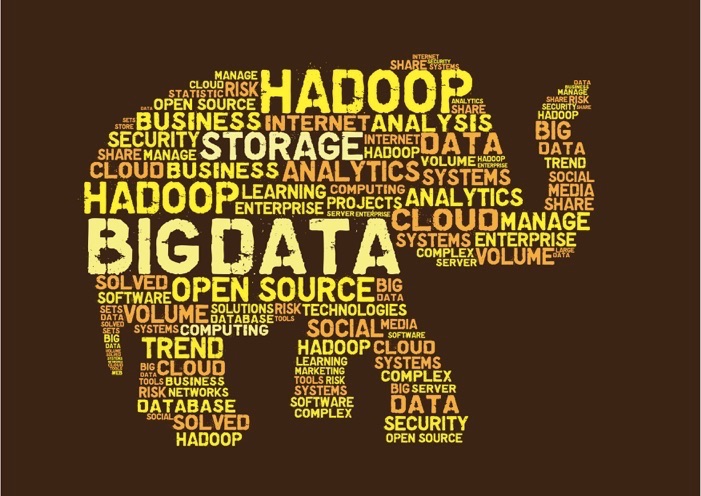
In order to get the most out of big data, it has to be modeled in order to bring the value it's so often associated with to customer service, which in turn trickles down to the customer. At its core, Big Data is raw, unfiltered and largely noise. It's not structured, organized or clean.  The only system currently out there with the power to tackle such large scale information is Hadoop, which has been around since the early 2000s.

hadoop
Hadoop is the closest thing available to enterprise-grade big data analytics. Image source


Currently there is no user friendly, on-demand and easily implementable enterprise data modeling system. There are many ways to tackle the big data noise, however, but many data models hit common obstacles including not being able to scale accordingly or organize the data in a sensible way, and still fewer work with existing analytics platforms and CRM information.


Just having the data is no longer enough. Making it accessible and understandable to everyone is the challenge today's modeling apps have to fix.


Pure Complexity


And finally, let's face it, we're only beginning to scratch the surface of what's out there. And yet it keeps growing and growing.  Costs go down, availability of information goes up.  Despite all its lucrative potential, big data can't replace people. When insights are gleaned from data scientists, they're passed on to managers and then employees.  If there's not a process in place to better understand and leverage the information you continue to gain, it's practically worthless.


The bottom line with using big data to better understand your customers is that there's a lot of expectations of what it can or cannot do. With such a wave looming overhead, it's easy to want to stand back and wait.  But just as the internet itself was once looked at as being “just a fad”, so too is big data poised to completely change what we know about our audience.


Being able to turn this information into insight is a challenge – but one worth tackling. We all know what happens when there's a rush to implement without a goal in mind.  Knowing the issues ahead of time can help you plan out a strategy that takes all of these points into consideration as you all work together toward a common goal – making sure every customer is exceedingly satisfied, again and again.


What are Your Thoughts on Using Big Data to Better Understand Customers?


Do you think big data is still in its infancy with regard to its use in customer analytics? Or do you think we simply lack the tools and understanding to make the most of it? What tools are you currently using to make sense of the data you collect? Share your thoughts and comments with us below.


About the Author: Sherice Jacob helps business owners improve website design and increase conversion rates through compelling copywriting, user-friendly design and smart analytics analysis. Learn more at iElectrify.com and download your free web copy tune-up and conversion checklist today!


Tuesday, July 26, 2016

Twitter Adds Night Mode to Android App

Twitter users with Android devices can finally tweet at night without subjecting themselves to the application's bright light.


The social network announced-via tweet, naturally-that its Android app now features a night mode:


How the Personality of a CMO Compares To Others In the C Suite

Last December, executive search firm Russell Reynolds released the findings of a report they conducted which they called Inside the Mind of the CMO. For their research they conducted online psychometric testing of 36 CMOs as well as other c-suiters, if you will. 


The results were quite interesting and insightful to say the least. 


Let's jump right in with a finding. 


As the authors of the report point out, CMOs, when compared to others in the c-suite, have a markedly extreme leadership and behavioral profile. 


From the report:


  • The first set of attributes (above) centers on CMOs' innovative, pioneering spirit-they act unconventionally, test limits and are not beholden to structures. These traits conform well to a conventional mental picture of a CMO.

  • The second set of attributes provides a welcome explanation as to how these innovators are successful in action-they use their strong social orientation and persuasive tactics to operate in a remarkably active and productive fashion.


I can tell you from the hundreds and hundreds of CMOs that I have interviewed and gotten to know personally over the past 10 years as a contributor to the Forbes CMO Network, these findings do not surprise me in the least. The fact that CMOs were found to be nearly 50% more imaginative than their c-suite counterparts is not only unsurprising but I would have guessed that percentage to be even higher. 


Help or Hinder?

For many CMOs, the aspiration is to progress along the ladder and make it to CEO. And while the report notes that CMOs "can bring a uniquely innovative sensibility to that role" they differ differ significantly from chief executive officers on several key attributes which may help or hinder their chances of growth.


Personally I happen to love the fact that CMOs are 33% more unconventional than CEOs and 32% more like to eschew structure and guidelines. As for being flashy, I don't even know what that means. But overall this could very well speak to the fact that a great number of CMOs are working with and for "old school" CEOs so when they are compared to them, of course they will appear to be more unconventional, etc. 


But that's a good thing. 


However, the report authors offer the following advice for CMOs wanting to be CEOs when they grow up. 


  • Be in the right place. Faster-moving or more transformational industries, in particular, are better suited to the CMO leadership style, as are companies in the midst of change or innovation programs. CMOs may struggle as a CEO in more heavily regulated industries.

  • CMOs need to moderate how they display some of their more extreme attributes. CMOs test limits, are bold and are upfront in their influencing style. CEOs seek to understand different perspectives and involve others in decisions but do not overanalyze. They achieve success through others yet remain tough minded.

  • Make sure others are on board. The CMO leadership style can be unconventional, colorful and flashy. CEOs exhibit measured emotion. CEOs excel at calculated-not careless-risk taking. They display intensity but maintain control.


The Boardroom


One way and place the CMO can show their value is by sitting on the board and in the boardroom, literally. Currently very few marketers sit on boards but as the tide of Modern Marketing advances, more marketing executives are rising to the top because credibility in the boardroom is measured in hard numbers. 


Download Marketers in the Boardroom and learn why marketers deserve to have a seat at the most senior level, get hints and tips for what marketers can do to attain board level and more. 


Google Launches Redesigned Zagat App on iOS

Google launched a redesigned version of its Zagat restaurant recommendations application on iOS. The app offers personalized recommendations to users, based on their locations and the time of day.


With the Zagat app, users can search for restaurants by cuisine, or by browsing interactive neighborhood maps. Users can sort their search results by rating, price or proximity, as well as filter their results to view “new places.”


While Zagat will continue to rate restaurants based on their food, service and decor, the platform's 30-point rating scale has been replaced with a new five-point scale.


The new Zagat app is available to download for free on the iTunes App Store.


Solar Impulse completes historic round-the-world trip


style="display:inline-block;width:250px;height:250px"
data-ad-client="ca-pub-7815236958543991"
data-ad-slot="8717335615">


A solar powered plane has landed in Abu Dhabi, completing a historic round-the-world trip with stops in India, Asia, Europe and North America.


“I've been waiting for this moment for 15 years,” said Solar Impulse chairman and pilot, Bertrand Piccard, in an impromptu speech on the tarmac shortly after landing.


“We should never accept the world to be polluted only because people are scared to think another way,” Piccard said.


The pre-dawn landing Tuesday by pilot Bertrand Piccard marks the end of an epic 25,000-mile (40,000-kilometer) journey. The plane made 16 stops, including in India, China, the U.S., Italy, Egypt and the United Arab Emirates - where it first took off.