Tuesday, November 1, 2016

We Used the Latest Holiday Selling Data to Create These Cyber Monday Hacks

I've always been a little skeptical of Cyber Monday. It always felt a little forced. Black Friday is a media bonanza as well, but Black Friday always seemed more discovered than created.


Cyber Monday on the other hand came off a bit manufactured. I figured that while there were certainly sales to be made from an ecommerce-centered selling holiday, the real money in online sales would be made on Black Friday as buyers become increasingly resistant to the Black Friday hype machine.


So, we pulled the data. We wanted to see how Cyber Monday works and what makes it tick. Inventory tracking is our bread and butter, so we maintain a multi-tenant database comprised of sales data from our ecommerce business owners. That's millions of sales. This gives us an overview of general trends within the industry across marketplaces, platforms, and niches. We extracted an SQL query of all sales data between November 25th and December 2nd minus POS systems, ensuring that our conclusions would be specific to ecommerce.


The goal? Discover what's fact and what's opinion behind the Black Friday vs. Cyber Monday debate and create a seller resource that allows retailers to be more methodical in their Cyber Monday strategy.


And I have to admit that looking at these data reports had me replacing my turkey with a big helping of crow. Cyber Monday is king.


Focus Your Efforts on Cyber Monday

ecommerce-sales-week


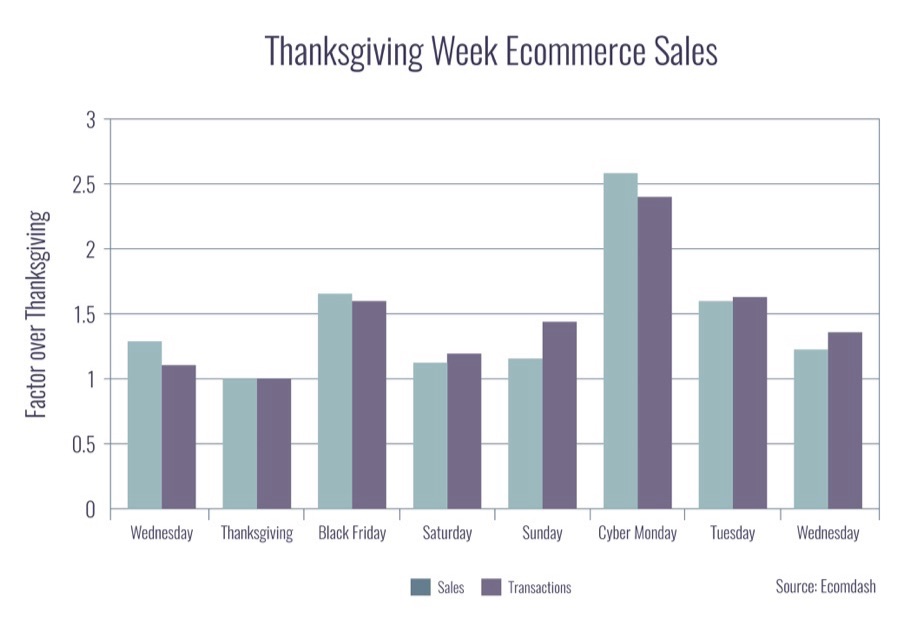
The buying public is biting hard at the Cyber Monday lure. While Black Friday does stand tall with over 1.5 times the sales and transactions of the previous day, Cyber Monday towers over the entire week, sticking out like a pimple on prom night. Nearly 2.5x the sales and transactions occurred on Cyber Monday as on Thanksgiving Day. In fact, the Cyber Monday fallout stretching into Tuesday is nearly as good of an e-tail day as Black Friday.


But what does this all mean? How can you apply it in 2016 to increase your sales and maximize on perhaps the most important week of the year for your business?


Here are four actionable tips to get you started. These don't require any expensive software systems or a huge amount of expertise, but they go a long way on capitalizing off the data-proven buying habits of shoppers during the first week of the holiday season. I've also provided some great examples of Cyber Monday sales from throughout the years from deep in my inbox. For extra fun, I only picked examples that personally made me convert. Let's dive in.


Have Your Email Marketing to Inboxes by 6AM


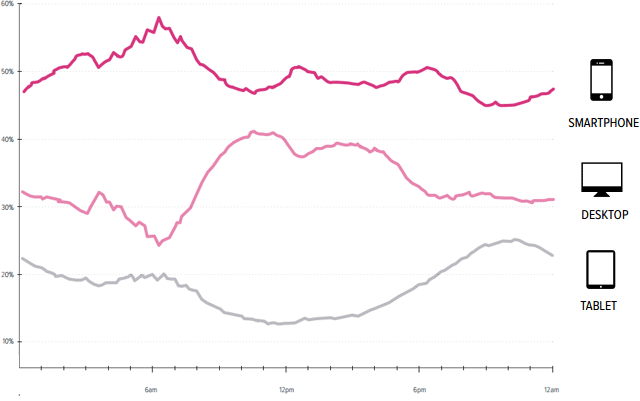
The first thing I do every morning is check my email, and I'm not the only one. Smartphone usage for email spikes in the morning around 6AM according to data compiled by Movable Ink.

email-opens-by-device-time-of-day


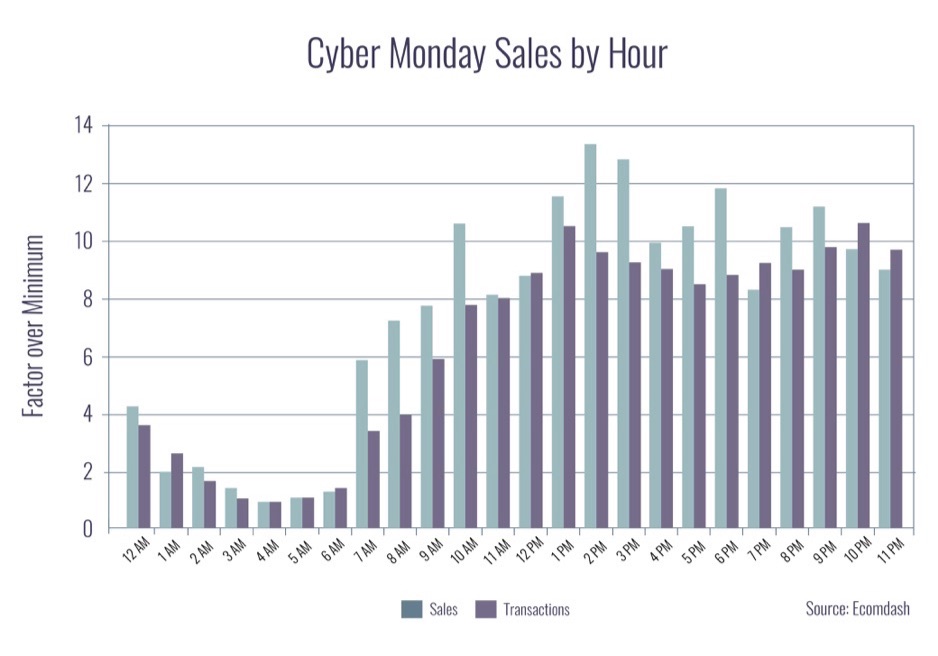
That explains why our data found that Cyber Monday begins at 7AM. People are waking up, immediately checking their phones, and making purchases. The sales eclipse the transactions for the next three hours, indicating customers may be more receptive to your email marketing efforts for big-ticket items in the morning.

cyber-monday-hourly


Data found by Marketing Charts drives the point home further. Average email open rates begin their daily upswing at 6AM and peak at 10AM.


open-rates-by-hour-marketing-charts


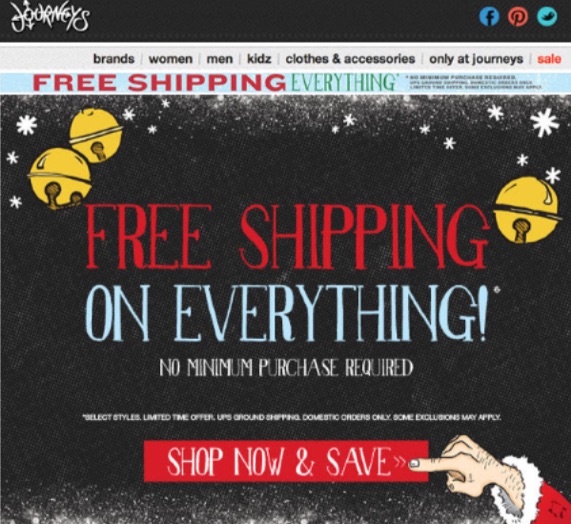
By the time your potential customers wake up, you need to have you email marketing efforts right in front of them. Why waste time? Feature your biggest ticket items and your best sales right off the bat. This example from Journeys hit my inbox at 2:10AM. It caused me to buy a pair of cream-colored Converse All-Stars. It shows us a couple of great ideas about how to cut through the sleepiness of someone's brain and claim an early morning conversion.

journeys-free-shipping


What I find really interesting here is that Journeys doesn't include a product photo. The email sells the deal rather than clothes. It reads as almost more of an announcement than an advertisement. There are three more replicable techniques for an early morning Cyber Monday email we can find here.


  1. Make the offer provocative and enticing. Words like “free” and “X% off” are sure to wake up your customers.

  2. Shove that offer directly and explicitly at your reader. Big, bold letters are a must.

  3. Dark colors that won't blind your reader are a great idea. An email with a lot of bright colors might hurt their eyes and cause them to put down their phone.


Advertise a Lunch Break Flash Sale on Twitter


Going back to our hourly data, we can see that the most money is being made around lunchtime. 1PM to 3PM is the largest peak you'll see throughout all of Cyber Monday.


Conveniently, Hubspot has found that 12PM to 3PM on weekdays is Twitter's most active period. Launching a 12-hour flash sale on Twitter at 12PM is a great way to get a great deal in front of the most customers at the time when they're statistically most likely to convert. It's a trifecta of data-driven methodology.


Use the hashtags #cybermonday, #flashsale, as well as any other relevant hashtags for your brand. Include an image, especially if you're able to include it as an embedded link. I bought this wonderfully nerdy t-shirt for an English teacher friend of mine last Christmas. I was browsing the #flashsale hashtag on Twitter during my lunch break. The limited time offer and the fact my lunch break was also limited increased my urgency, leaving me less time to waffle and potentially abandon my cart.


Perhaps you're a little wary of putting eggs into your social media basket. You've got that big fancy email list, but perhaps you've relied on it a little too much. Keep in mind that your customers are going to be bombarded all day with sale after sale in their inbox. You don't want to blend into the background noise. Moving some of your marketing efforts over to social media gives you an opportunity to attract new customers on an open platform, Type A buyers who are looking for Cyber Monday sales. With that in mind, apply these three tips.


  1. Attach the flash sale to a lower selling item, or one in which you have excess inventory. Don't risk it on a high selling item, especially if this is your first flash sale.

  2. Use Twitter's audience management tools to create a targeted Twitter ad to promote your flash sale.

  3. The shorter the time for your flash sale, the more urgency you create for the buyer. On the other hand, they have less time to see the sale. It's a delicate balance.


Send Out an End-Of-Day Marketing Email


After the workday ends, customers begin to spend less money. The number of overall transactions spikes at 7PM as a result of people getting off work who perhaps are in jobs where they're not able to online shop on their lunch break. Similar spikes occur at 10PM and 11PM as the slowpokes among us suddenly remember its Cyber Monday, or finally have time to sit down and shop. That's why you should send out one more marketing email at the end of the workday to capitalize on this group of buyers.


“But what about bombarding my customers? Won't they get annoyed if I email them twice in one day?”


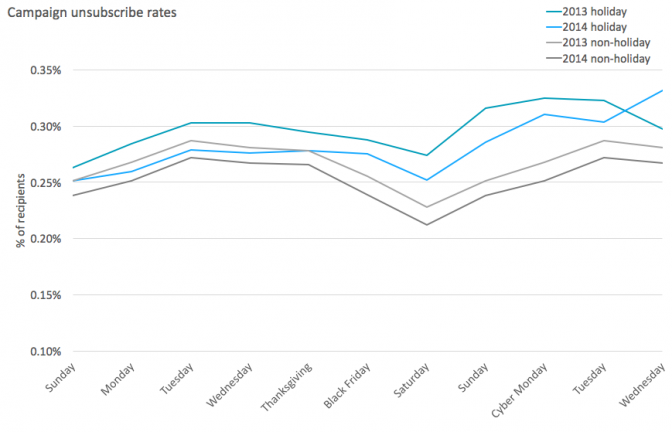
On Cyber Monday, they don't. MailChimp notes that the overload of email offers decreases open rates across the industry on Cyber Monday, but don't significantly increase unsubscribe rates. They go on to note that the best way to get noticed is to send more emails than normal. This is not the time to be quiet and hope you'll get noticed. There's too much money on the line to be timid.

campaign-unsubscribe-rates
(Image Source)


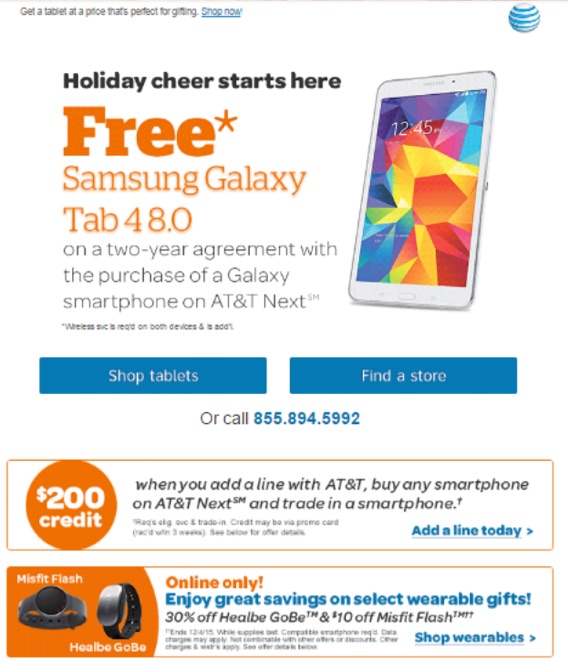
This sleek AT&T Cyber Monday sale landed in my inbox at 4:15PM. We were desperately trying to introduce some technology into my dad's life at the time, so this seemed like the perfect present. Notice how they lead with the FREE tablet. I also really like the messaging that this is where the holiday cheer is “starts,” as it implies a season's worth of deals and shopping is to come.

att-holiday-email-advertisement


Another key takeaway here is bundling your items. Since people seem to spend less in the evening, but the total transactions increase, it's important that you can get as much as you can out of each transaction. Bundling items together means you can charge more for each transaction.


AT&T is technically doing two different bundles here, one much subtler than the other. Not only are they bundling the tablet and the phone, but they're also offering a $200 credit. What could you use that $200 credit on? Maybe some of those wearables they advertise below. AT&T is not only bundling their products, but also bundling the sale itself. A three step series of purchases that starts with the headline FREE is great marketing from this mobile giant.


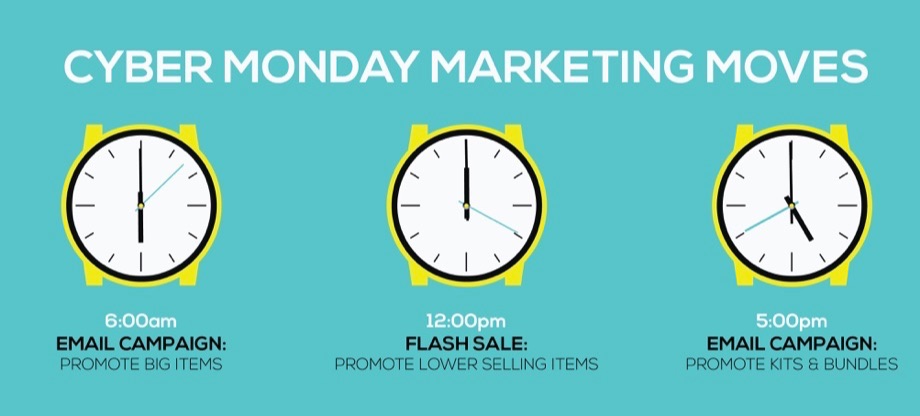
Getting one last email out completes a nice full days' worth of Cyber Monday digital marketing. Let's make sure we've got our Cyber Monday marketing timed out to perfection.

kissmetrics-watch


You've taken advantage of the early birds, the night owls, and the lunch… larks? Being an active seller throughout the day ensures that you're getting the most of out the holiday.


Allow Customers to “Earn” Free Shipping Rather Than Giving It Away to All


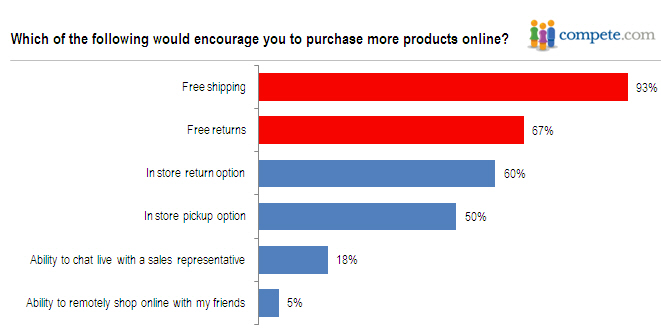
I'm a big believer in free shipping. What it does for ecommerce conversions is undeniable at this point. It's worth the cost. According to Compete.com, over 93% of customers cited it as a factor that would make them more likely to buy an item. The same study found that 38% of customers found the shipping cost to be the least satisfactory part of their shopping experience.

free-shipping-increase-sales
(Image Source)


Our own research, however, appears to suggest perhaps buyers aren't as sensitive to shipping costs as they say they are. We found that offering free shipping does not move the needle on your sales throughout the week of Cyber Monday.
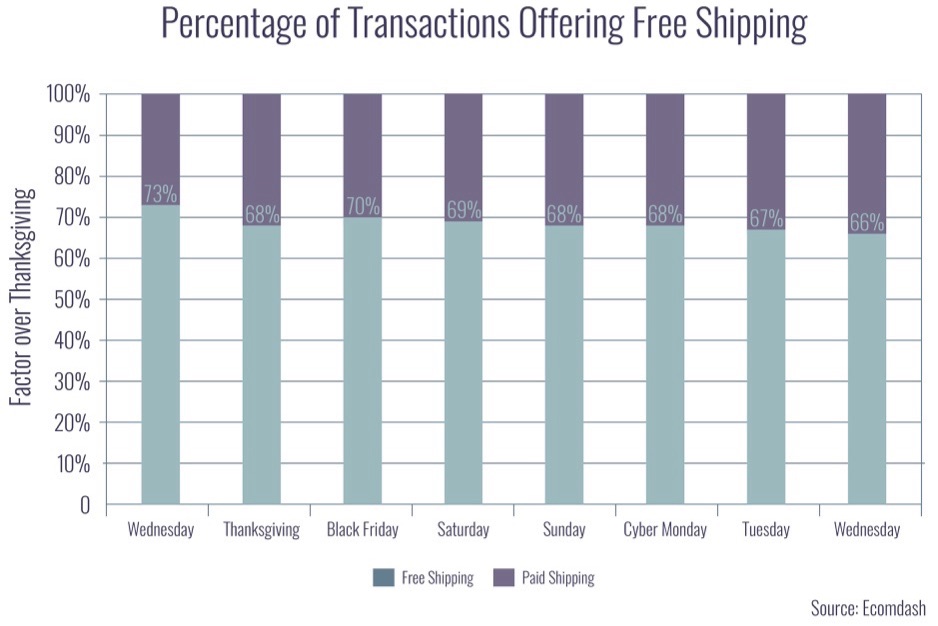

percentage-free-shipping


I've got two theories as to why this is. The first is that Cyber Monday may be attracting some non-traditional online buyers. Those of us who shop online often throughout the year know that if one vendor isn't offering free shipping, it's probably worth the time to find a similar item with a vendor willing to ship for free. Cyber Monday shoppers may not be familiar with this, so it doesn't become a major factor in whether or not they convert.


My second theory is that the event of Cyber Monday is outweighing the normal aversion to paying for shipping. People want to feel as if they are a part of something. It could make them less prudent than normal and more prone to paying for shipping, especially if they perceive the deal as being worth it.


Either way, we can make a few data-driven decisions based on this info. We could of course just take away free shipping altogether for the week of Cyber Monday. Customers are willing to pay for it, so we might as well just take their money, right? That feels a little wrong though, doesn't it? After all, the benefits of free shipping outweigh the negatives. It's good for the customers and the sellers.


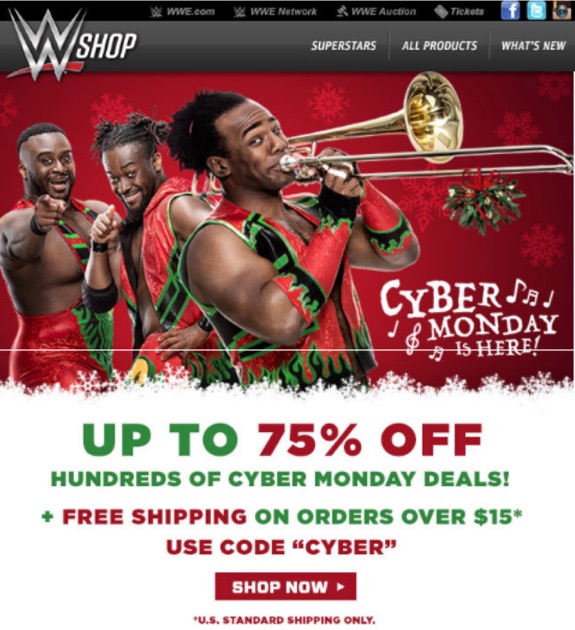
With that in mind, offer customers a chance to “earn” free shipping. Check out what WWE Shop sent me on a Cyber Monday a few years back.

wwe-shop-cyber-monday-sale


WWE Shop set the free shipping limit to $15. Doing something similar with your business will allow you to increase the value of each transaction. Buyers may spend more to get the free shipping, and transactions that remain below $15 will be less expensive for you to process.


Consider other ways you can allow your customers to earn free shipping, such as in exchange for filling out a customer experience survey, registering on your site, or bundling the item with a less popular item.


Conclusion


Let me sum up all these graphs and examples for you as simply as possible.


  • Cyber Monday is a phenomenon, not a flash in the pan.

  • Be methodical about your digital marketing to capitalize on sales spikes throughout the day.

  • Allow customers to earn free shipping rather than giving it away to everyone.


I think data is beautiful, especially data that makes us money. By going about your selling in a data-driven manner, you can take full advantage of Cyber Monday. We'll most likely see sales spike on this ecommerce holiday. But wasted motion is wasted money. Don't fumble around in the dark and hope you'll stumble on profit. Use these hacks instead, experiment to see which works best for you, and make Cyber Monday your best sales day of the year.


About the Author: Dion Beary writes about ecommerce for ecomdash, a software company that automates inventory management for small businesses selling online. His passions are Twitter, casseroles, and 00's rap.


5 A/B Test ideas for mobile gaming apps

We talk a lot about a/b testing here on MarketingExperiments. What we don't usually talk about is a/b testing for the mobile web…especially testing within mobile apps.


I thought we should change that. As I was scouring the web looking for mobile a/b tests, I found this 2-year old video by Amazon.


Apparently, Amazon Web Services (AWS) at one point had an a/b testing feature that is now closed.


When they had testing, however, one app developer used it extensively and shared their experiences in a promotional video for the feature on Amazon. The developers were behind the game Air Patriots. Russell Caroll was the Senior Producer for the game and Julio Gorge was the Game Development Engineer. The game is a kind of aerial take on the classic tower defense game genre.


air patriots screenshot

Air Patriots


Now granted, this was a promotional video, but the content still speaks for itself. These guys had (and still have by the looks of it) a fairly successful mobile app and they ran some successful tests. It's a great starting place for what you can test in your mobile app.


By the way, while Amazon has shut down its a/b testing feature, there are a lot of other tools for testing mobile apps that will accomplish the same thing the developers talk about in the video.


Test #1: What is the impact of ads on customer experience? (1:34)


The first thing the team tested was the impact of ads are on their customers. They wanted to make sure the ads did not harm the customer experience. So they tested a single ad in the main menu near the bottom of the screen.


air patriots menu ad


They found that the ads didn't affect customer retention. This meant that they could insert ads and generate more revenue without hurting their customers.


Test #2: Will in-game ad placement affect customer retention? (2:56)


In the second test, the team put ads in the game screen.


air patriots in-game ad


In both the first and second tests, the ads had a little “X” that the customers could tap to hypothetically dismiss the ads. When they tapped, a pop up came up that told customers they could eliminate ads with any purchase in the game's store.


In this test, there was again, no impact on customer retention, but there was a statistically significant increase in revenue.


Test #3: Simple game-circle icon test (4:20)


In this test, the team wanted to know whether an icon to the game-circle (Amazon's game stats and leaderboards portal) would improve performance.


air patriots game-circle


It's not clear which icon won, or even why this particular test was useful for the team, but they did get a favorable result, and the lesson they wanted to drive home was that simple changes like icons can make a difference. We've, of course found that to be the case in a large number of our tests on MarketingExperiments.


Test #4: Does game difficulty affect revenue? (4:58)


In this 4th test, Caroll made a mistake. He accidentally changed the game difficulty to make it about 10% harder. As a result, every metric that was important to them tanked.


air patriots metrics


The team of course fixed it as fast as possible, but it gave them an idea.


What would happen to revenue if they made the game easier?


So they ran a test that had 5 treatments: The control and then 4 difficulty levels that were easier than the control.


It turned out that the easiest difficulty performed the best. By making it easier, they players playing 20% longer and revenue went up 20%.


Test #5: When is the best time to have push-notifications for re-engagement in inactive players? (7:43)


The team then tested a push-notification that offered inactive players and incentive for picking the game back up.


air patriots push


They wanted to know when the best time to send the notification would be. So they tested a few different variables and found that the best time was 3 days after the last game play.


They also found that sending the notification 7 days after the last game play negatively impacted their performance metrics.


With these 5 tests and probably a few more that have been happening off the record, the team was able to develop a great app for their customers and steadily increase their revenue. At the end of the video Carol gives a few key takeaways for marketers who are a/b testing their apps.


You might also like:


Email Research Chart: Email opens trends on mobile devices in 2015


Mobile Marketing Chart: Amount of revenue from the mobile channel, by merchant type


3 A/B Testing Case Studies from Smart Brand-Side Marketers


Sprout Social & Twitter Are Working Together to Enhance the Social Conversation

Open communication between brands and people creates progress. Nowhere is this more critical than when a person reaches out with a customer service inquiry or issue on Twitter which has rapidly become one of the best places for people to talk to businesses. Sprout has recognized this by enabling brands to reply to consumers in a timely and effective manner through a suite of collaborative engagement and response management tools.


Today, alongside Twitter, we're announcing plans for two exciting Direct Message features that help agents solve customer service issues in a more timely manner. These new features use a combination of simple automation and human service. Specifically, welcome messages and quick replies will help brands streamline their customer service inquiries and provide customers with efficient and informed responses.


Sprout is currently working collaboratively with Evernote, a leading platform to capture, nurture and share ideas, to implement these tools and discover new, innovative ways to increase productivity for their team.


As Twitter notes, “These features are designed to help businesses create rich, responsive, full-service experiences that directly advance the work of customer service teams and open up new possibilities for how people engage with businesses on Twitter.”


twitter-evernote-launch-illustrations


Enhanced Automation in Action With Evernote


Welcome messages and quick replies create efficiencies for the agents behind the @evernotehelps support handle. In turn, Evernote's service agents can better serve their user base.


The automated welcome message proactively greets anyone reaching out to the @evernotehelps handle via Direct Message and asks a simple, predetermined question: “What brings you to @evernotehelps today?”


Delivered in conjunction with the welcome message, four quick reply options enable the Evernote user to simply tap a button and let the agent know the nature of their issue or inquiry.


Paramount to the entire experience is the transparency that the Evernote user is interacting with an automated message. Careful wording demonstrates this and sets the clear expectation that a human agent will step in shortly to ensure proper customer care.


Automating this initial interaction guides the Evernote user to share the information needed without requiring a human to ask for it. It also eliminates a repetitive process for the Evernote agents which leads to a quicker and more informed resolution. When the agent steps into the conversation via Sprout's Smart Inbox, they already have the context they need to begin addressing the customer's needs.


The features we're building help by complementing the agent. The result is quicker issue resolution and happier humans on both sides of the conversation.

Aaron Rankin
CTO & Cofounder
@SproutSocial


Sprout's Stance on Automated Experiences


While we would never advocate for only-automated social conversations, this suite of automation features has the power to enhance both the customer and agent experience by bolstering speed and efficiency.


Aaron Rankin, Sprout's CTO and Co-founder, expounds: “Forms of automation, such as chatbots, when implemented carefully, are effective because they are really fast and never get tired. Human agents can get fatigued or overwhelmed, which leads to slow responses, impatient users and drawn out support conversations. The features we're building help by complementing the agent-who's often juggling multiple support conversations and dealing with high volumes of inquiries across channels. We're effectively assisting the agent with an eager chatbot helper. The result is quicker issue resolution and happier humans on both sides of the conversation.”


With this simple yet effective chatbot, Evernote expects benefits to be twofold. The brand anticipates a more informed support team with each Twitter interaction and a reduction in customer effort leading to a superior customer experience.


“In many respects we believe this is going to change the way our customers engage with us via Twitter,” said Geoff Barry, Manager, Support Scaling & Care Tools at Evernote.


“These tools will let our customers set the context for the kind of conversation they want to have, and our time will be spent less on repetitive information gathering and instead on providing a richer experience and faster, more effective assistance.”


new-twitter-customer-support-features-evernote

This is the latest effort of our continuing dedication to improving workflow and providing exceptional end user experiences for Sprout customers. In the past year, we've proudly worked with Twitter and forward thinking brands like Evernote, SoulCycle, prAna and Monarch Airlines to build tools that facilitate more productive communication between brands and people. Some of these feature updates include DM deep links, Customer Feedback and, most recently, Response Indicators.


If you want to learn more about how your team might use Sprout's features to better implement customer care efforts on Twitter, contact your Sprout representative or email sales@sproutsocial.com.


This post Sprout Social & Twitter Are Working Together to Enhance the Social Conversation originally appeared on Sprout Social.


The horse race 'that stops a nation' cops a sledging on social media

Https%3a%2f%2fblueprint-api-production.s3.amazonaws.com%2fuploads%2fcard%2fimage%2f267492%2fscreen_shot_2016-11-01_at_2.49.19_pm
Feed-twFeed-fb

The annual Australian celebration of dressing up, drinking bubbles and throwing money at horses running around in a circle has arrived once more. With it, come the inevitable the social media mutterings of those not-too-chuffed with the whole affair.


The Melbourne Cup is an annual horse race with a colourful history. In recent years, that history has included more calls to ban the race, after the very public deaths of a few of competing animals.


With satire and cynicism, Australians against "animal cruelty," gambling or mass displays of drunkness and big ol' hats, have taken to social media to express their waning interest in the sport. Read more...

More about Australia, Twitter, Gambling, Horse Racing, and Animal Cruelty


Millennials Driving Change in Marketing, Media (Report)

Social media marketing has become a great disruptor, turning the industry on its head and redefining what it means to create success in marketing. However, the true disruption is more likely generational, with millennials taking a different approach than Madison Avenue baby boomers.


A report from video editing software provider Magisto examines how millennials influence marketing and what that means for the industry.


Millennial marketers are adapting to the changing market a lot faster than their baby boomer counterparts. Among the 500 small and midsized businesses surveyed, millennials spend 58 percent of their budget on digital media, compared with 14 percent of boomers. Similarly, 41 percent of millennials surveyed spend the bulk of their budget on mobile, compared with just 10 percent of boomers.


According to Magisto chief marketing officer Reid Genauer, the disparity is because many millennials are digital natives with a culture of innovation:


For them, digital and mobile-first marketing is not a shift but rather the natural order. Failing fast and being agile is not a concept: It's a way of being. Creating and publishing mobile-first content is not novel its central. By dissecting, adopting and tailoring a marketing playbook that has already been written by digital natives, legacy businesses can effect bold change with minimal risk.


Millennials recognize the power of social marketing, and it's a core aspect of their approach. 44 percent of all SMBs surveyed depend on social ads for brand awareness, yet the split between millennials and boomers is 68 percent to 27 percent, respectively. 41 percent also rely on social ads for revenue, and there's a similar split–60 percent to 27 percent.


Boomers also lag behind millennials when it comes to testing their marketing, innovation and embracing video marketing. Millennial markets have the edge on all fronts when it comes to creating and understanding the future of marketing. Spoiler alert: The future lies with video and social, not with print and television.


Check out the full report for more details.


Unbounce is Launching Something New: Get Ready for More Conversions

As a marketer, you spend a big chunk of your time launching campaigns or creating content aimed at attracting the right customers.


As simple as that sounds, the effort behind these initiatives is more complex than we'd like to admit. And the reality is, most visitors to your site just don't convert.


So when you've got a specific lead or sales target to hit, a tight and dwindling budget to drive new traffic, time constraints that won't let you wait for your developers and no resources to run A/B tests… what is a marketer to do?


We've got a secret for you: not all conversions need to come at the result of blood, sweat and tears. Sometimes, boosting conversions can be a simple as giving visitors more opportunities to convert.


This is why Unbounce is about to launch a brand new tool that will help you get bigger and better results by alleviating the day-to-day pressures.


Here's your sneak peek:


On November 15th, we're launching a new conversion tool to give you more ways to get conversions from your current campaigns, without the hassle and stress.


Have we piqued your interest?

Sign up to be the first to get all the juicy details.

By entering your email, you'll receive more updates from Unbounce. You can unsubscribe at any time.


Over Half of Global CMOs Are Making Data Driven Decisions

With topics such as predictive analytics and artificial intelligence growing in not only importance but popularity among the c-suite, the idea or concept of using data to determine and drive marketing decisions is hardly breaking news. 


In a recent Marketing Land piece, the writer put it perfectly and quite succinctly: "Data permeates every facet of business today, and marketing teams are evolving to reflect the data-driven culture. While there is still an art and creative science to marketing, even the creative aspects of the job are now driven by insights and analysis."


Another way of putting it succinctly goes something like this: Marketing leaders must create a data-driven marketing culture and organize the required people, processes and systems.


The Numbers Don't Lie

It would appear global marketing leaders are getting that message, at least based on the findings below via eMarketer. As you can see from the results of a survey of global executives including C-level and their direct reports, in 21 countries across various industries about their digital transformation.


Now the cynic would say these numbers should be higher across the board but let's not haggle. Let's enjoy the fact that over half of global leaders are using data to make decisions and in doing so are presumably eliminating data silos and create a single source of truth;  a 360-degree view of customers to reliably and efficiently target the right message, to the right person at the right time. 


Data = Increased ROI

Anytime you see anything that positively impacts ROI you can bet a CMO, let alone any marketer will be drawn to it. And data is no different. 


In more research via eMarketer 40% of marketers saw an increase in revenue as a result of utilizing a data driven marketing approach from Q1 to Q2 2016. Moreover, another 52% expected to see a revenue increase in Q3 2016 due to the use of data driven marketing. 


Singles Only

No, I am not going to talk about the latest dating site or the next chapter meeting of your local community association. This is all about the aforementioned single source of truth, the inherently important need for your organization to have a single customer identity that unites behaviors across all channels into one comprehensive profile.  


Today, certain technologies can link all the unique cross channel identifiers of a customer back to a single unique identifier. Once you have a single unique identifier, you can really know who your customers are across all channels, and begin to:


  • Personalize interactions based on channel preferences and behaviors. 

  • Reach a more precise level of targeting and segmentation by using cross channel behavioral information in real time.

  • And most importantly, integrate cross channel communications and speak to each customer with a single voice regardless of channel.


The Data Driven CMO

Today's Chief Marketing Officer is tasked with many demands, made even more challenging with the ever-evolving digital domain. Their biggest challenge? Leveraging personalization to demonstrate and drive clear ROI to the executive team.


Download The Data Driven CMO to see how leading CMOs weigh in on other challenges, including how they can skillfully decipher, understand, and leverage the abundance of available data to engage with customers.