Tuesday, August 2, 2016

Writing an Email Like a Human “Absolutely Crushed” A Traditional Marketing Send [2 Min Video]

“If you write an email like a human being would write an email, you're going to get a better response.”


So says Nathaniel Ward, Associate Director, Online Membership Programs, The Heritage Foundation. The Heritage Foundation is a non profit conservative think tank focused on conservative policy formation and promotion.


I realize quoting a political organization of any kind is just asking for an incendiary response in today's political environment, but bear with me on this one.


Partisan or not, they have a very sophisticated email marketing department, especially for a non profit. And Ward's approach to email testing and messaging is critical for any organization to study and learn from.


Time Stamps:

0:27 – How the test was set up


1:17 – The results of the test


1:26 – Interpretation of the test results


1:43 – Ward's takeaway for other marketers


You might also like…


Consumer Reports Value Proposition Test: What you can learn from a 29% drop in clickthrough


Online Testing: How a B2B SaaS nonprofit increased clickthrough on landing page by 291%


Email Marketing: Nonprofit achieves 12.5 times higher donation revenue per email than industry average


Earn a Graduate Certificate in Communicating Value and Web Conversion


What B2B Marketers Need To Know About Video

In case you hadn't noticed, video has quickly taken over the Internet, and with it dramatically changed the behaviors of modern buyers. And this is a great thing for modern marketers.


Cisco projects that video will comprise 79 percent of all Internet traffic by 2020. Meanwhile, 72 percent of B2B buyers now watch video content throughout their entire path to purchase with nearly half of those viewing 30 minutes or more while researching a company. It makes perfect sense: video is a powerful medium. For viewers, it's enjoyable to watch and easier to consume and retain. For marketers, it's the best way to connect with audiences in a personal and emotional way. That makes it powerful not only for brand awareness and advertising but also for educating, engaging and converting audiences.


As part of our multichannel marketing strategy, we've produced more than 1,000 videos, which now generate roughly 2 million viewing minutes per year. We partner with Vidyard to help us centrally manage our video content, track the viewing activities of each contact within Oracle Eloqua, and analyze the impact of each video.


Today, video is one of our highest opportunity influencers, but it took some work to get here. Here's what we did:


Step #1 – Organizing and categorizing our video collection

We started by categorizing our video assets to get a better handle on what we already had. We split ours by type, including events, webinars, user conferences and a general category to catch everything else. Then we got rid of videos that weren't helping or were no longer being used. We created a formula accounting for the number of recent views, the value and quality of the content, and the age of the video. Videos that didn't get a high enough score were archived so we could focus on the content that really mattered.


Step #2 – Adopting a modern video platform to optimize results

We adopted a video marketing platform that made it easy to manage, publish, track and measure our video content. This was a key step to building a data-driven video marketing strategy. In addition to making it easier for the team to manage our growing library, we now had access to relevant insights on the performance of each video asset and the engagement patterns of our viewers. By integrating this data into Oracle Eloqua, we could generate new insights on which content was resonating with which segments, and which videos were influencing the most pipeline.


Step #3 – Developing a cohesive content strategy for video

We started with a simple approach. We prioritized our top two buyer personas – developers and operators – and created video content aimed at early- and late-stage buyers in each persona category to help with awareness, interest, education and decision-making. Then we continued to build out our library to ensure that we had video content to address key topics at each stage of the buying journey for each main persona. During this process it's critical to build a plan, set some dates, and stay focused on content delivery.


Step #4 – Finding the balance between generating awareness and generating leads

We aimed for 80 percent brand awareness and opportunity progression, and 20 percent new lead generation, which helped us determine which content to gate. We distributed different content via email, social channels, landing pages and our core website and made sure all were viewable on any device and available in multiple languages.


The Results

Focusing on the right content while combining our video platform and marketing automation system has led to smarter marketing and better demand generation results. Now we know who watches our videos, which content is most relevant to particular segments and which videos generate ROI.


And I'm happy to say that MongoDB is not alone in this journey. Our friends at Vidyard just shared how more than 100 Oracle Eloqua users are now using viewer engagement data and video marketing insights to make smarter decisions and achieve great results. Given the latest market data on the importance of video for both buyers and brands, I have no doubt this trend will only continue.


It's All About the Leads

Using video is a great way to generate leads. However when those leads don't convert to sales, you can't afford to abandon those prospects. You need to nurture these leads with information aligned to their stage in the buying process. 


And to learn just how to do that and more, download the Lead Nurturing Guide for Modern Marketers.


How to Create a Hashtag Just for Your Business

With so many advertisements, billboards and commercials in our face, it's tough to find one without an added hashtag. In the late '90s, phone numbers were slowly replaced by AOL keywords and websites. Eventually social media handles made their way onto ads.


Now businesses create a hashtag for consumers to find more information about a product or service. Whether it's a branded term, phrase or call to action, hashtags increase social media engagement.


When you create a hashtag, you give users a new way to get in touch with your business on social. Or users can simply engage in the conversation happening around that hashtag. This is just another way for consumers to engage, discuss and connect with businesses on social media.


However, you can't discount the power of a successful hashtag for your business.


Reasons to Create a Hashtag


Creating a hashtag for your business can have a lot of benefits. Essentially, hashtags give you additional strength toward customer engagement. Not only that, but hashtags tend to be great marketing resources.


Certain hashtags work like call-to-action phrases where users can interact with brands. By using them, you're giving users another method to remember you.


For example, Minute Maid uses the hashtag #doingood. The brand gives you a source of conversation about what it means to “do something good.” But Minute Maid also hopes you'll use this hashtag the next time you think of #doingood or drinking its products.


When to Use Hashtags


People use hashtags for several different things. For example, some of the most optimal hashtags uses include:


  • Promotions

  • Events

  • Contests

  • Product Launches

  • Career Opportunities

  • Cross-Channel Discussions

  • Targeting


All of these examples require some sort of conversation. And for company-specific hashtags, they should entice discussion and ultimately engagement.


Benefits of Creating a Hashtag


To help spread the word about your product or service, you need a source of engagement. Hashtags continually prove to be great resources for engagement. So when you successfully create a hashtag for your business, other benefits include:


  • Optimize for Discovery: Hashtags are basically another organic output for your content. If you optimize your hashtags and use phrases or keywords pertaining to your industry, you're more discoverable.

  • Increase Traffic: Like we mentioned above, hashtags make your brand discoverable. Once you're easier to discover, you're likely to see higher social media traffic. Hashtag searches occur on Facebook, Twitter and Instagram all the time.

  • Showcase Brand Advocates: Your brand advocates are trusted sources. In fact, Nielsen discovered 92% of consumers trust brand advocates over businesses. Hashtags are a great way to help showcase brand advocate recommendations.


  • Measure Your Efforts: By using third-party social media management software like Sprout Social, you can track hashtags within your most important networks. Hashtag analytics gives you insights into what's resonating with customers or what's falling flat. Having the extra data could make all the difference.

  • Cross Networking: A nice feature of hashtags is you can use them across channels. This will help your cross-channel promotions and make it easier to use hashtags for each major network.


How to Create a Hashtag


Now that you have an idea of when and why, you're probably wondering exactly how to create a hashtag. Before you start coming up with clever phrases or keywords, you have to know your end goal.


Like we mentioned earlier, hashtags have the chance to increase traffic, clicks and engagement. All these things should factor into your social media ROI strategy. So before you start, consider your hashtag goals.


For example, you might want to:


  • Increase brand conversations with your company

  • Be more visible on a specific social network

  • Find hashtags related to you

  • Increase total link clicks

  • Measure total reach

  • Increase mentions

  • Have better grasp of social media trends


These goals could detail your social media marketing efforts more efficiently. Just remember to have an end goal before you create a hashtag.


Determine Your Social Network


Once you have your goals down, it's time to determine the social network you want to use. The list of goals above can apply to specific social networks. So it's critical to know where you'll promote your hashtag.


Depending on your goals, your network could change in importance. If you're creating a branded hashtag that generally supports your company, you could be safe for any social network.


However, here are a few things to consider before choosing a network for your hashtags:


Twitter Hashtags


Hashtags started on Twitter. So you know this is the perfect space to use hashtags for discovery, conversations and hopping on major trends. As a business, it's smart to use hashtags on Twitter for timely events. If you're using a popular keyword in your hashtag, you have the chance to get more eyes on your Tweet.


Tweets with hashtags have advantages over Instagram hashtags because you can link each Tweet. While Instagram allows links in the bio, every Tweet could have a hashtag and a link. This makes it less confusing to get customers from social media to your marketing pages.


Also, Twitter's search features make it simple for branded hashtags. These hashtags are unique to a brand, but are easily discoverable from other Tweets. This is why so many brands do social media campaigns on Twitter. For most businesses, it's hard to go wrong with this channel.


Instagram Hashtags


One area you might not want to promote Twitter hashtags is with visual content. While Twitter supports images and videos, users tend to engage more with visual content on Instagram. This platform is perfect for contests, promotions and other heavily-visual content.


If you take a wrong turn, make it work in your favor #WhatMovesYou #ballet #dancelife


A video posted by DegreeWomen (@degreewomen) on


Instagram hashtags are frequently searched, so your chance of discovery is more likely. However, Instagram hashtags aren't very cross-network promotional. While you can link to your Facebook or Twitter in your bio, typically you want to save that space for your promotional or marketing site.


A major benefit of Instagram hashtags is you can use up to 30 per post. Brevity is essential with hashtags. But you can hide hashtags on Instagram. This lets you avoid over tagging posts and boring your current followers.


Can Data Security Keep Up With Fraud, Bots and Hackers?

Hacking, fraud, and malicious bot activity online is getting more sophisticated. As businesses work to eliminate weak points in their security infrastructure, passwords may become obsolete. But are there more breaches, or is there simply more awareness related to breaches, hacking and fraud?


Motherboard contributor Jason Cox noted that breaches seem to be increasing rapidly. He quoted Keen, owner of breach archive Vigilante.pw:


[T]here were 64 dumps in 2011, followed by 71 in 2012, 107 in 2013 and 158 in 2014. But the following year, the number of breaches nearly doubled to 317. This year, there have been 183 breaches so far […] There's definitely loads of data that I'm missing, but i think 1,300 DBs is a decent sample size.


According to Keen, part of the reason for the increase in breaches is the decided uptick in fraudulent or malicious activity overall. Everything from phishing attacks to more sophisticated bot traffic is leading to more security breaches and leaked data.


Other factors include an increase in hackers and other malicious users sharing data with one another, more of these users trading or selling stolen credentials and the rise in software designed to collect even more sensitive data.


Ransomware is so good at generating profit for the that it has become the target of piracy and theft itself. According to Motherboard, the leak of 3,500 potential decryption keys designed to unlock systems infected by ransomware known as “Chimera” was an attempt by rival ransomware creators to undermine the effectiveness of Chimera.


And this is the landscape businesses are fighting against as they endeavor to improve data security. Unfortunately, large amounts of unsecured or improperly secured data and vulnerabilities left unpatched have become common threads in data breaches. In certain places, even Heartbleed still hasn't been patched.


The speed at which security innovations are implemented and adopted, by both consumers and businesses, clearly isn't keeping pace with developments in hacking and fraud. Unpatched vulnerabilities continue to be exploited, companies continue to use weak protocols and users fail to take adequate steps to protect themselves. Innovations in security are wonderful, but if companies and consumers don't use them, data leaks will continue unabated.


Image courtesy of Shutterstock.


Why Facebook Bots Have Amazing Potential (And Why You Should Still Ignore Them)

Chatbots are the latest in a long line of tech trends to sweep through the marketing world.


One use and it's delightfully obvious why.


Ranging from fun and whimsical to straight-up commercial, chatbots present interesting new potential for companies to reach and engage customers.


Facebook messenger bots specifically present one of the brightest areas for marketers, tapping into their huge network and built-in advertising features.


However despite the promising outlook, you might be better served by ignoring this trend (for now).


Here's why.


The Promising Future of Facebook Bots


Chatbots magically combine pattern matching (low-level artificial intelligence) to present options to users instantly based on a number of predefined rules.


Based on your real-time responses, a chatbot will work to get you closer to finding exactly what you're looking for. That intent-driven nature makes it especially promising for marketers, showing a glimmer of hope similar other intent-based (not to mention, high converting) platforms like search engines.


Chatbots on Facebook messenger have been begun popping up everywhere the past few months, with help from platforms like Motion.ai and Smooch.io that help bridge the technological gap for the masses.


Expanding into Facebook's existing advertising infrastructure is mouth-watering. For example, you're able to integrate existing SMS messaging campaigns to Facebook Messenger accounts with phone number tracking.


There's also the potential for these chatbots to replace 800-numbers and other awful customer service experiences in favor of a real-time, at-your-fingertips, information retrieval system.


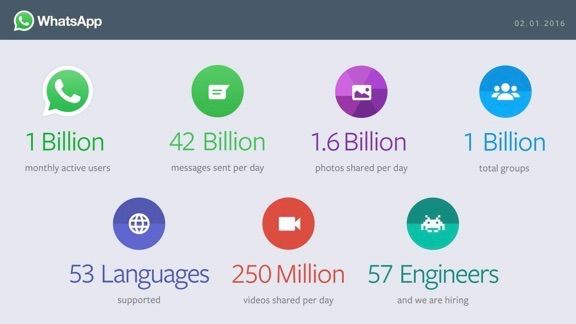
That's not even taking into account the massive potential that is WhatsApp (and its 1 billion monthly users), which Facebook owns, but doesn't currently allow this technology.

whatsapp-stats
Image Source


Some companies are already tapping into these benefits, as Andrew Tate highlights excellently on AdEspresso.


HealthTap allows you to speak directly to a doctor. Well, not exactly. It will start by showing you recommended answers from doctors to similar questions made in the past. Depending on your results, you can then send the question out to a real, live doctor to get an answer.


Spring gives you personalized shopping recommendations. List of questions for styles, price range, type of clothing and more to eventually whittle down its answers. This wonderful little chatbot does all the hard work for you, removing the need to browse for hours on end.


And one of the most cited examples 1-800 Flowers, where you can make a new order with a simple message. Enter the location for drop-off, and you can browse their options to make a purchase immediately. (although it's worth noting that you currently can't process credit card payments within Messenger).


Awesome stuff. No doubt.


But here's the problem.


Despite their awesome potential, chances are, you should NOT worry about chatbots right now.


Where do Buyers Come From?


In what seems like decades ago (ok, it was only about five years), Forrester Research analyzed over 77,000 consumer orders and released The Purchase Path of Online Buyers.


The goal was to determine which channels were responsible for the most buyers (not subscribers) to help marketers decide where to invest their precious resources.


The results were surprising exactly how you'd expect if you've been doing this for awhile.


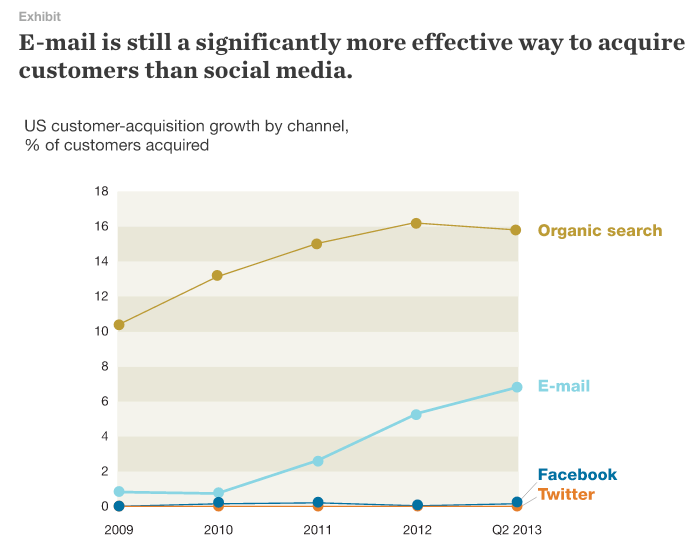
Social accounted for less than a percent of sales (although in fairness, there's undoubtedly a host of attribution problems).


Otherwise, Search (both Paid and Organic) was the top driver of new sales. Email was at the top for repeat customers.


Fast forward a few years and McKinsey found that things had… well, not changed at all.

email-aquiring-customers
Image Source


The way people purchase today has become increasingly more complex, with multiple touch points and many different channels used along the way. Many marketers struggle with getting a handle on understanding their own customer journeys.


The point though, is that there are a few fundamental things that should be working flawlessly before spending time, money and attention chasing the latest trend (despite how promising this particular one is).


Here are a few examples.


Here's Why You Should Ignore Facebook Bots (For Now)


Why do people leave your site?


Somewhat surprisingly, it could be how sloooooooooow pages take to load. If an eCommerce site fails to load within three seconds than half of its traffic will bounce.


Then there's also poor design and navigation issues, too many competing or cluttered offers, and a mismatch between what got people there, and what's on the page. Along with a ton of other reasons.


What's the reason you should forget about Facebook messenger bots for the next few months?


Opportunity cost.


Exhibit A.


McKinsey also found that despite the majority of visitors opening your email on mobile devices, many of the landing pages people are being sent to still aren't responsive.


(Not to mention, just because a website is 'supposedly' or technically responsive, doesn't mean that the mobile experience doesn't suck.)


To make matters, 61% of those people with bad experiences won't return. While 40% will go straight to your competition.


That means not only are your landing pages costing you lost sales. But they're also serving as your competitor's best advertisements.


Fixing those landing pages should be important. Priority #1 in fact when you go in on Monday morning. It should at least place well ahead of dabbling in new social features which may, or may not, pan out.


Based on data and experience, you know – beyond a shadow of a doubt – that improving landing pages will result in greater conversion rates (and thus, more revenue).


You just haven't done it yet.


Because, to-do lists. Emails. Meetings. Etc.


Exhibit B.


Every good little marketer uses email. It's like PB&J at this point. But, it too is under some strain.


Competition is at an all-time high (and only getting worse), so getting your messages to stick out from the other junk in people's inboxes is a tall order.


Then there's deliverability issues, which email service providers getting ever-more sophisticated to noticing (and filtering out) your promotional emails.


A handy and helpful solution is marketing automation, that relies on timing, relevancy and personalization to cut through the crap.


On the plus side? It works. Delivering twice as many leads compared with your typical spray-and-pray approach.


The downside? Only 13% of marketers are using it. 13%!


Despite the fact that marketing automation can send you 451% more leads. Or increase average sales 34%.


Case-in-point: a whopping 85% of B2B marketers are not satisfied with their marketing automation efforts. Even despite marketers ranking it at the top of a latest survey from Smart Insights of digital activities with the greatest impact.


Wait. Why? Too busy Snapchatting or Instagramming to worry about increasing revenue?


But it gets better.


Exhibit C.


Let's see what happens if we combine the activities found in Exhibit A & Exhibit B.


Williams-Sonoma saw a 10x lift in response rates when they sent triggered emails based on specific things people were just looking at on the website.


(Pro tip: Williams-Sonoma is also a great place to score free coffee at the mall using their Nespresso display.)


Personalized campaigns “consistently and overwhelmingly beat” static ones after analyzing 650 multi-channel marketing campaigns.


HubSpot analyzed 93,000 calls-to-action (with “hundreds of millions of views over 12 months”) and found that ones targeting specific user actions resulted in a 42% improvement over standard ones showed to everyone.


This is the same approach remarketing takes, personalizing ad creative while capitalizing on impeccable timing to show people exactly what they were just looking at. At a 46% reduction in cost compared to normal ads to boot.


Want a trend to follow? There's your trend!!


Conclusion


Chatbots are undoubtedly one of the sexiest trends to watch develop.


Facebook messenger bots up the ante, initially promising a huge opportunity with their massive audience and built-in advertising features.


However…


What keeps getting pushed down your to-do list already? How many activities have you neglected (or ignored) that could (and more predictably) increase revenue over the next 30 days?


Poor mobile landing pages? Tired, boring email campaigns? Static website calls to action?


If you're working with Coca-Cola, go get you some Facebook bots!


If you're like the rest of the 99% of us and you're (a) already overwhelmed, (b) spread too thin, (c) understaffed, (d) on too tight of deadlines, with (e) not enough money to spend, maybe it's time to double down on the fundamentals.


Fix the underperforming stuff you're (most likely already) aware of. Increase sales.


Then go play with some Facebook bots.


About the Author: Brad Smith is a founding partner at Codeless Interactive, a digital agency specializing in creating personalized customer experiences. Brad's blog also features more marketing thoughts, opinions and the occasional insight.


Making Marketing Analytics as Simple as 1, 2, 3

Google Analytics reports

Even 10-foot-high data charts are useless if you don't do something with the data. Image via Shutterstock.

Every smart marketer on the planet gets just how important data is in marketing.


But answer me these questions, and answer them honestly: Do you know how to analyze your marketing data? Do you know how to use your analyses to improve your results?


During his presentation at Call To Action Conference, co-founder of Orbit Media, Andy Crestodina, revealed that many data-driven marketers are not getting any value from their analytics. They tend to admire data charts rather than analyze the data and act on it. Unfortunately…


Pretty charts don't actually do anything for you unless you take action.


Crap. Who else thought that looking at a few neat graphs in Google Analytics was enough?


Analyzing data can be as easy as 1, 2, 3


To increase traffic and conversions, marketers need to know how to interpret their own data and turn data insights into action. Andy debunked the myth that you've got to be Einstein to analyze your data. This is jolly good news for those of us who break out in cold sweats at the mere thought of number crunching.


He laid out a fool-proof three-step approach to help marketers analyze their own data and turn their analyses into action. It involves using the ever-trendy (but actually invaluable when you know how to use them) Google Analytics reports: Audience, Acquisition, Behavior and Conversion.


Let's dig in.


1. Turn ideas into questions


What do you want to find out?


2. Find answers


Look for a report that can help you validate or reject the idea.


3. Take action


Take what you've learned and use it to optimize your marketing results.


By using these simple but effective steps, you can find the answers in Google Analytics to some of your most pressing marketing questions. You're going to learn how to decrease bounce rate, rank higher in Google, boost reader engagement and increase conversions. Trust me, this is game-changing stuff.


Make sure you're logged into Google Analytics and on the Reporting page. Let's do this!


Audience reports


Google Analytics Audience reports don't just tell you who your users are, they also show you how sticky your website is. If you want to find out how well your website is working across various devices and browsers, this report is your new best friend.


Example: How to decrease your bounce rate using Audience reports


Sometimes bouncier can mean better, but this is definitely not the case in marketing. If you have a high bounce rate (whether on your website or blog), then it's likely that your content isn't very relevant or user-friendly.


For smart marketers, the aim of the game should be to get bounce rates as low as humanly possible.


Using Google Analytics Audience reports, Andy shows us how to find out our website's bounce rate across different browsers.


1. Ask a question


“Is your website working well in every browser?”


2. Find the answer


Click on Audience reports > Technology > Browser & OS. This will give you an overview of the bounce rates for users of every browser.


Audience report Google Analytics

All these numbers look pretty similar. So now what? Let's go one step further by clicking on the Comparison view. This option pitches the site average for bounce rates for each browser against each other to give you a clearer picture of which browsers your website is working on.


Audience report Google Analytics

Bingo! It seems the poor souls visiting Andy's website from an Android or Opera browser were having a particularly tough time. Which browsers have the highest bounce rate on your website?


3. Take action


Don't stop now that you've identified any problem areas. It's time to take cold, hard, remedial action. Why are the bounce rates for users or certain browsers higher than others? What can you do to find out? Simple. You can start by testing your website pages on these browsers to see why people aren't sticking around on your site. You could check out page loading time, browser responsiveness and usability. And then, if necessary, optimize your pages for these browsers.


Acquisition reports


In other words, where are your website visitors coming from? Are they arriving at your website via Twitter or Facebook, or are they landing on your pages directly from Google? An Acquisition report gives you a detailed view of your traffic sources, so you can work out where you need to ramp up your marketing efforts.


Example: How to rank higher in Google using Acquisition reports


For Andy, people who arrive on your website through search engines are much more likely to convert than those who reach you via social networks. In fact:


Search traffic converts into leads 600% more than social traffic.


Holy cow. So when your goal is to drive conversions, focus on optimizing your website for search engines rather than driving traffic from social media. Andy suggests that you can creep up the search engine ladder by finding out how you currently fare in Google and turning your findings into action.


Sneaky.


1. Ask a question


“What phrases are we ranking for?”


2. Find the answer


If you haven't already, activate Search Console in your Google Analytics settings. Then go to Acquisition > Search Console > Queries. You will not only get a list of all the phrases you rank for (under Query), but also how highly you rank for them in Google (under Average Position).


Acquisition report Google Analytics

Andy recommends that to be even more cunning, you should find the phrases you rank for on page 2 of Google.


It's not that hard to move up a tiny bit in your rankings. If a tiny bit means going from page 2 to page 1, trust me you're going to quadruple traffic next week for that page.


Do this by adding an advanced filter. Select Include > Average Position > Greater than and enter the value of 10.


Acquisition report Google Analytics


These are Andy's results:


Acquisition report Google Analytics

What about yours?


3. Take action


Now it's time for you to search for these phrases in Google, confirm the rankings and see which web pages you're dealing with. It's down to you to improve these pages to push them further up the Google ranks. Andy suggests creating longer pages or adding video as some ways of doing this. If you're short on ideas, here's a rather handy on-page SEO optimization checklist from Amanda Gent, another Orbit Media web marketing buff.


Behavior Reports


These reports give marketers golden insights into the behavior of their website visitors (no prizes for guessing that one right!).


They can show you precisely what your website visitors are searching for, what they're engaging with and what they are actually doing on your web properties. For example, you can find out what your visitors typed into Google before clicking on your website, which posts they spend the most time reading and the path they follow, from landing page to exit page.


This is not just nice-to-have info; it's absolutely vital to any marketer who wants to succeed in these consumer-centric times. Yes, I'm talking to you there!


It's every content marketer's dream to create content that people want to engage with. Andy kindly shows us all how to use the Behavior reports to find out which of our blog posts people love the most.


Example: How to boost reader engagement using Behavior reports


1. Ask a question


“Which of your blog posts are the most engaging?”


2. Find the answer


Go to Behavior > Site Content > All pages.


Search for “/blog” in the filter field to view posts on your blog page only. Then organize the results by the Comparison view.


Behavior report Google Analytics

Select “Avg. time on page” from the drop-down list in the third column. This shows you which blog posts your readers are engaging with most compared to the site average.


Behavior report Google Analytics

Look for similarities between the most engaging posts. Do they talk about the same subject? Are they the same type of post (e.g., a how-to or a guide)? In the example, the posts with the highest engagement all cover Google Analytics. Hey, what a marvellous topic for a blog article!


3. Take action


The actions are pretty obvious. Once you know which posts your readers dig, you need to deliver more of the good stuff. Invest some time in promoting these posts. Create and publish more content on the same or related subjects.


Conversion Reports


If a marketer's ultimate goal isn't to convert, then what is? Conversion reports give you valuable insights into which of your website pages or posts push people to convert. It may not be rocket science. But it certainly is pure 24 carat marketing gold.


Example: How to increase conversions using conversion reports


1. Ask a question


“Which blog posts inspire action?”


2. Find the answer


For this one, you need to have goals set up in your Google Analytics account. If you haven't, there's no time like the present.


Go to Conversions > Goals > Reverse Goal Path. This shows you which pages your converters were looking at before they completed an action, or goal.


Select the goal from the “All goals” drop-down list. In the example, Andy selects “Newsletter subscribers”.


Conversion report Google Analytics

This shows you which pages people were on before subscribing to the newsletter. Now click on “advanced” to add a filter:


Conversion report Google Analytics

And then filter as so:


Conversion report Google Analytics

VoilĂ ! A list of the blog posts your visitors were reading before subscribing to your newsletter.


3. Take action


With this valuable info under your belt, you can now focus your efforts on driving traffic to the posts that convert the most visitors. Andy recommends promoting these posts using social media, email or even showcasing them on your website's home page. You could also publish more content on your highest converting topics.


From passive marketing to active marketing


There we have it. A whole host of great examples - based on asking questions, finding answers and taking action - that we can all use to perform our very own analyses and improve the results of our marketing efforts.


Andy taught us that analyzing our own marketing data is fundamental to improving our marketing results and that anyone - dataphile or dataphobe - can do their own seriously valuable data analysis. All you need is a Google Analytics account and a no-nonsense approach.


As for the most valuable takeaway of them all? Inspiring marketers to not only act on their data, but also to adopt a culture of analysis, reflection and experimentation. Now you've got the tools you need to become an active data-driven marketer, the rest is down to you.


Pro-fracking website targets millennials with GIFs and memes

Https%3a%2f%2fblueprint-api-production.s3.amazonaws.com%2fuploads%2fcard%2fimage%2f164353%2fgettyimages-462812136
Feed-twFeed-fb

Nuanced debate? Scientific discussion? Yawn.


FrackFeed, a pro-fracking website from industry groups and oil and gas companies, is targeting millennials in their native tongues: Memes, quizzes and listicles.


Rihanna, Ron Burgundy, bloated toads and angry groundhogs serve as the backdrop for snarky messages extolling the virtues of hydraulic fracturing for oil and natural gas - without few other details to distract you from kitty gifs.


The website is part of a bigger campaign by North Texans for Natural Gas, an advocacy group that is seeking to drown out the “small but vocal opposition that uses the internet to spread fear and bad information,” according to its website. Read more...

More about Gifs, Memes, Natural Gas, Hydraulic Fracturing, and Fracking